Bedtime Stories About Farm Animals
There is something about a barn at night that settles children right down. The animals are tucked in, the chores are done, and everything moves slower than it does in daylight. Farm stories give you gentle, familiar characters — a sleepy calf, a waddling goose, a patient old horse — and a world that already runs on quiet routines like feeding and closing the gate.
This page has ideas for tonight, thoughts on keeping a farm story calm rather than exciting, notes on what tends to work at different ages, and a way to make the farm in the story an actual farm your child knows.
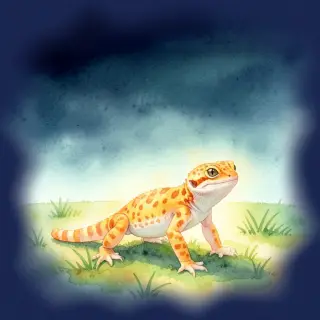
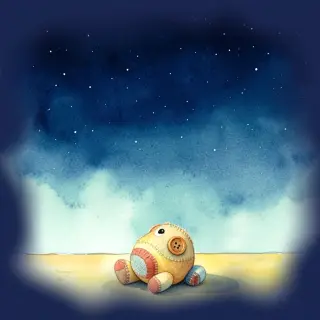
Example story covers
Examples of the illustrated books Once makes. Every family’s are their own.








Why farm animals work at bedtime
Farm stories are built around a rhythm children already understand: morning chores, an afternoon in the field, and everyone settling in for the night. That rhythm mirrors bedtime itself, which makes it easy for a child to feel the story winding down along with them.
The animals themselves are usually gentle by nature in these stories — a cow chewing quietly, a goose keeping watch over her eggs, a donkey standing still by the fence. There is no need for anything dramatic to happen. A duckling finding its way back to its mother, or a lamb getting used to a new barn, is enough of a story to hold a child's attention.
Many children also have some real connection to farms, whether through a grandparent's place, a visit to a petting zoo, or a picture book. That familiarity is comforting at the end of the day, when a child wants a world that feels known rather than new.
Keeping it calm
Farms have plenty of energy during the day, so it helps to choose the quiet moments for a bedtime story. The animals coming in from the field at dusk. The barn going dark except for one lantern. A cat curling up in the hay.
Avoid anything with a storm, a lost animal in danger, or a fox on the prowl. These are common in farm tales but they raise a child's heart rate rather than lowering it. If an animal wanders off, have it found quickly and gently, with no real scare in between.
Ending on a small, ordinary detail works well: the barn door latched, the water trough still, the last light in the farmhouse window going out. A slower pace and a softer voice in the last minute or two of the story helps signal that it is time to rest.
What works at different ages
Toddlers around two or three tend to enjoy simple sounds and repetition: the cow says moo, the gate creaks, the hay rustles. A short story about one animal doing one small thing, like a hen settling onto her nest, is often plenty.
Preschoolers around four or five like a bit more of a sequence, such as walking through the whole evening routine of a farm, animal by animal, until everyone is asleep. They also enjoy knowing the names of things, so a pony's name or the color of the barn door adds something.
By six to eight, children can follow a gentle problem, like a lamb who cannot settle in a new stall, and enjoy some quiet decision-making, such as which blanket to bring it or where to place its water. Keep the stakes low and the resolution warm.
Making it their farm
A story feels most like a bedtime story, rather than just a story, when it belongs to your child. Once is an iPhone app that writes bedtime stories starring a family's own children, pets, grandparents, and places, so if your child has a grandparent's farm they visit, a family dog, or a memory of a petting zoo, the story can be built around that real place and those real animals.
You read the story aloud yourself, from a calm, dark page designed for nighttime, since While reading, you can choose Gentler, More, or Sleepy to steer what happens next, so you can slow things down the moment you sense it is time.
If the story turns out to be a good one, it can be shared with family by private link, which is a nice way to send tonight's story to a grandparent whose farm just became part of it.
Six ideas to tell tonight
- 1A little calf who cannot fall asleep until she has said goodnight to every animal in the barn, one by one.
- 2A gentle old horse who remembers, in a few quiet lines, all the seasons he has seen on the farm.
- 3A hen who counts her eggs every evening before settling onto the nest for the night.
- 4A young goat who gets to sleep in the farmhouse for one night because of the cold, and finds it very strange and cozy.
- 5A sheepdog finishing his last round of the field at dusk, checking that every sheep is where it should be.
- 6A duckling who loses track of his mother for a few minutes near the pond and finds her again by following her call.
Questions parents ask
How long should a farm animal bedtime story be?
For younger children, three to five minutes is usually enough. Older children can often follow a slightly longer story, but the important thing is that the pace slows near the end, whatever the length.
My child is scared of a specific farm animal. Should I avoid it in stories?
You can simply leave that animal out, or give it a very small, calm role. There is no need to address the fear directly in a story unless your child brings it up. If the fear seems strong or persistent, it is worth mentioning to your child's doctor.
Are farm stories a good choice for a child who has never visited a farm?
Yes. Many children enjoy farm stories through books and shows long before any visit, and the familiar shapes of barns, fences, and animals tend to feel comforting rather than foreign.
What if my child has a real farm connection, like a grandparent's farm?
That is often the best material for a bedtime story, since the child already has real memories and details to draw on. Once can build a story around a specific grandparent's farm, or a family pet, so the setting feels like theirs rather than a generic one.